
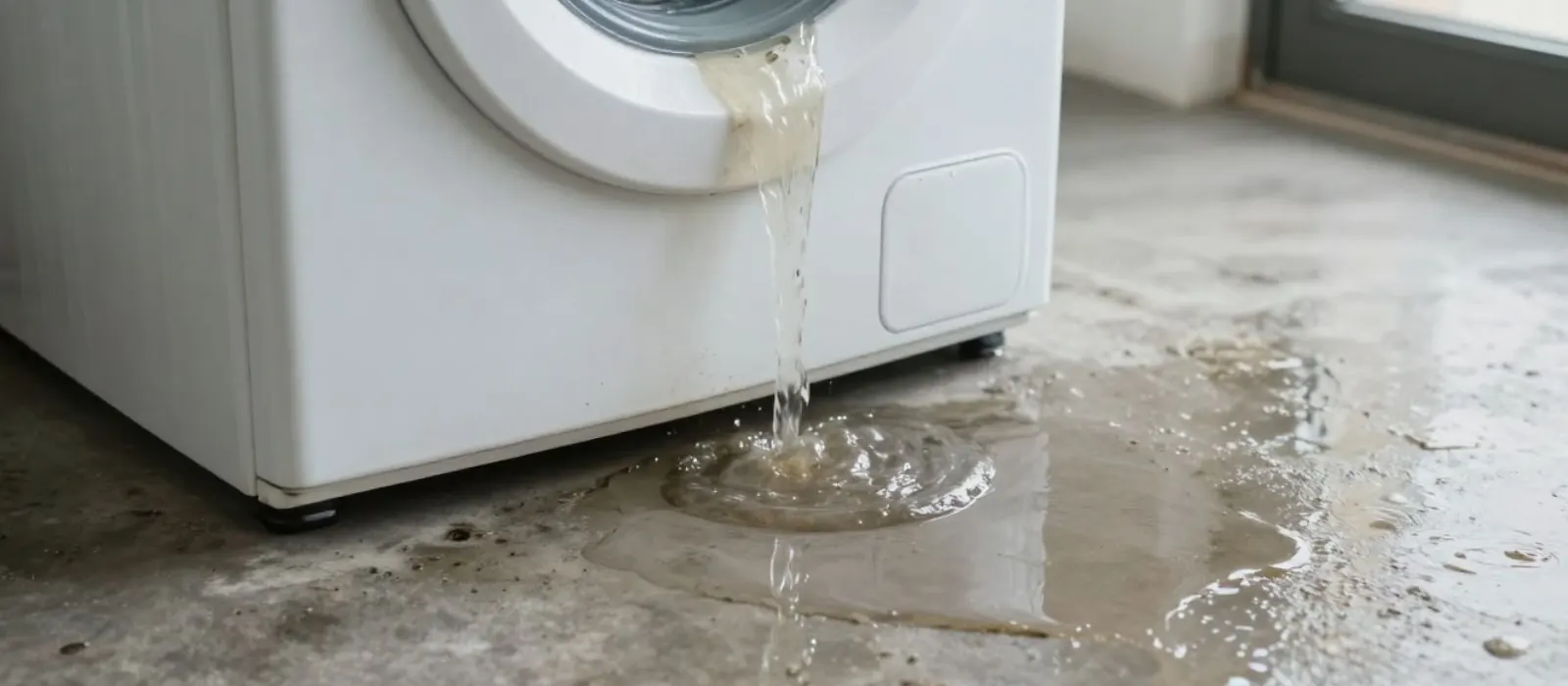
Appliances fail in ordinary ways. A washer hose splits, a dishwasher door seal goes stiff, a refrigerator icemaker line cracks behind the unit. The water often runs behind or under the appliance before anyone sees it, and by the time a puddle appears the floor edge, cabinet base and wall bottom are already wet. If a leak is running now, call (760) 769-1159.
Where appliance leaks come from in Apple Valley homes
Washers cause the most trouble. Rubber supply hoses stay under pressure all day, even when the machine is idle, and they age with heat and time. Stainless braided hoses last longer, but the rubber washers inside the fittings still wear. A hose that bursts at full pressure empties the supply line onto the laundry room floor until someone closes the valve.
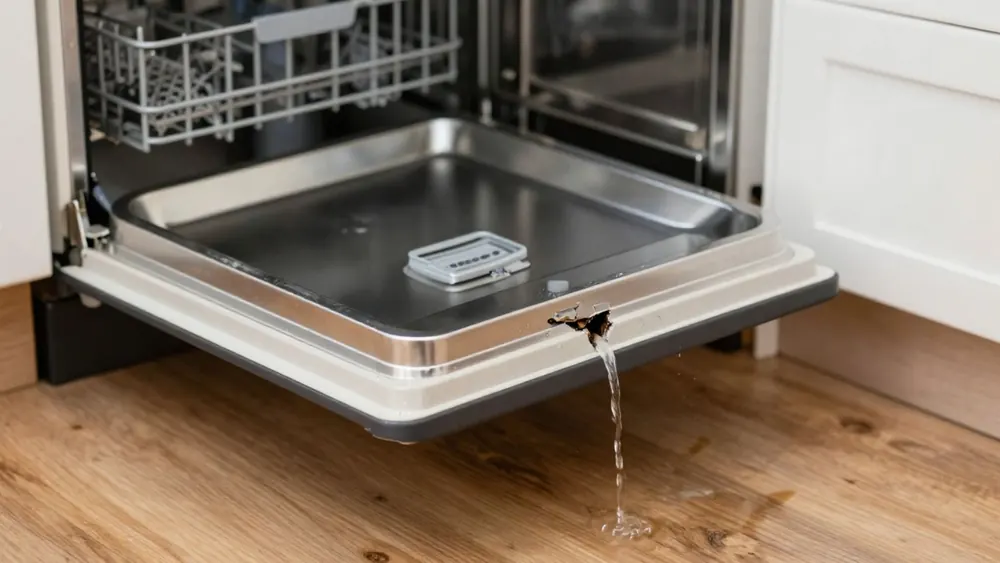
Dishwashers leak at the door seal, the pump housing and the drain hose. Refrigerators leak from icemaker lines and from clogged defrost drains. Garbage disposals and under-sink connections add to the list. The Town of Apple Valley utilities element says Apple Valley Ranchos Water is the primary provider and serves about 19,000 connections, so most homes here have steady line pressure sitting behind every hose.
The Census Bureau QuickFacts for Apple Valley lists about 25,000 households, and roughly 70 percent are owner-occupied. That leaves a large share of renters, who often cannot see behind appliances or control hose replacement. If you rent, tell the landlord about a leak right away and photograph it with a date.
Age matters more than brand. A washer hose that has been under pressure for several years is overdue for replacement, and a dishwasher that was shifted during floor work may have a stressed drain connection. When we arrive, we trace the water backward from the wettest spot, because the puddle is usually downhill from the real leak.
Signs an appliance is leaking
| What you notice | What it usually means |
|---|---|
| A damp spot or puddle on the floor beside the washer | A supply hose, drain hose or door seal is leaking |
| Buckled laminate or lifting tile edges near a kitchen appliance | Water has been running under the flooring for some time |
| Swollen cabinet base next to a dishwasher | A slow leak is soaking the cabinet floor and toe kick |
| A musty smell behind a refrigerator | Icemaker line or defrost drain has been leaking onto the subfloor |
| Water stains on the ceiling below a second-floor laundry | Water has gone through the floor and into the ceiling |
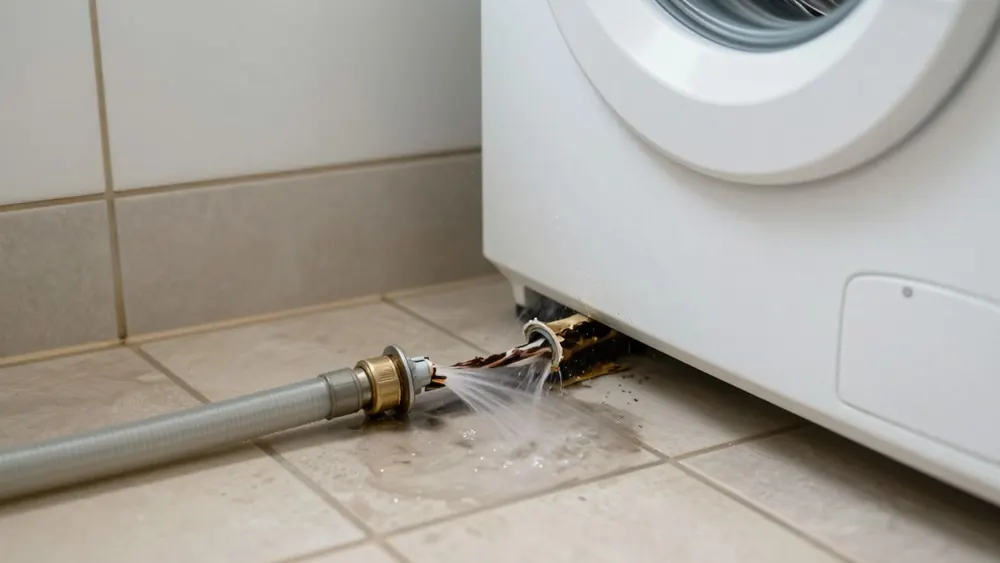
First-hour safety steps for an appliance leak
Power, then water
Unplug the appliance only if the floor around the outlet is dry. If water is near the plug, shut off the breaker at a dry panel instead. Never reach behind a wet appliance with bare hands while it is connected.
- Close the water valve behind or beside the appliance. Washers have two, hot and cold.
- Stop the power using the breaker if the plug is wet.
- Pull the appliance forward only if it is safe to do so, so you can see where the water went.
- Lift rugs and soak up the surface water with towels and a wet vacuum.
- Photograph the leak, the appliance label and the floor, then call. The California Department of Insurance advises keeping a log of every call to your insurer.
Leak under the washer?
Close the valve, then call (760) 769-1159. We answer all hours.
How we handle an appliance leak loss
We extract the water with wet vacuums and portable extractors, then measure moisture in the floor, baseboards, cabinet bases and adjoining walls with meters and a thermal camera. Water under laminate or vinyl plank is common, so we check the edge of the room rather than only the visible puddle.
Wet pad, swollen baseboard and soaked cabinet kicks are removed where needed. Air movers, floor drying mats and LGR dehumidifiers dry the rest. ANSI/IICRC S500 is the published standard we use as the reference for that drying work, and readings are logged at every visit.
If the loss spread, water mitigation shows how we stage structural drying, and water damage repair covers rebuilding once the structure is dry.
What changes the cost of an appliance leak
- How long the leak ran and how much floor edge it reached
- The floor type, since laminate, tile and hardwood respond differently
- Whether cabinets and drywall are wet
- How easily the appliance can be moved for access
- The equipment days needed to reach dry readings
Repairs to the appliance itself are not part of our work. We explain scope and price before we start.
Insurance and appliance leaks
A sudden hose or seal failure is often covered for the water damage it causes, though the appliance itself usually is not. A leak that ran unnoticed for months may be treated as gradual damage. Renters should check their own policy and notify the landlord, because the building policy often does not cover tenant belongings.
Your insurer decides coverage. We supply readings, photos and a written scope.
Appliance hose prevention and mistakes to avoid
- Replace rubber washer hoses with braided stainless hoses and date them
- Turn off the washer supply valves when you travel
- Pull the dishwasher and refrigerator out once a year to check the floor
- Do not run a washer or dishwasher while the house is empty
- Do not stuff towels around a leak and walk away
- Never ignore a puddle that comes back
Appliance leak help across the High Desert
We cover 92307 and 92308 and the nearby cities of Victorville, Hesperia and Adelanto. For a failed water heater tank, see water heater leak cleanup.
Frequently asked questions
Is emergency appliance leak cleanup available in Apple Valley?
Yes. Dispatch is open 24 hours a day, every day. A crew is sent the same day when one is available and the dispatcher tells you what to shut off. We do not promise an arrival time.
Can water under a washer reach the next room?
Yes. Water follows the lowest path under flooring and through gaps in walls. We check adjoining rooms with moisture meters rather than assuming it stopped.
Should I dry the floor myself?
You can blot standing water, but towels and fans leave moisture under flooring and in wall bottoms. The EPA says to dry water-damaged areas within 24 to 48 hours.
Who is responsible if I rent?
Tell the landlord in writing and keep photos. Your renters policy may cover your belongings, and the landlord usually handles the structure.
Do you repair or replace the appliance?
No. An appliance technician or plumber handles the machine and its hoses. We handle the water, the drying and the cleanup.