
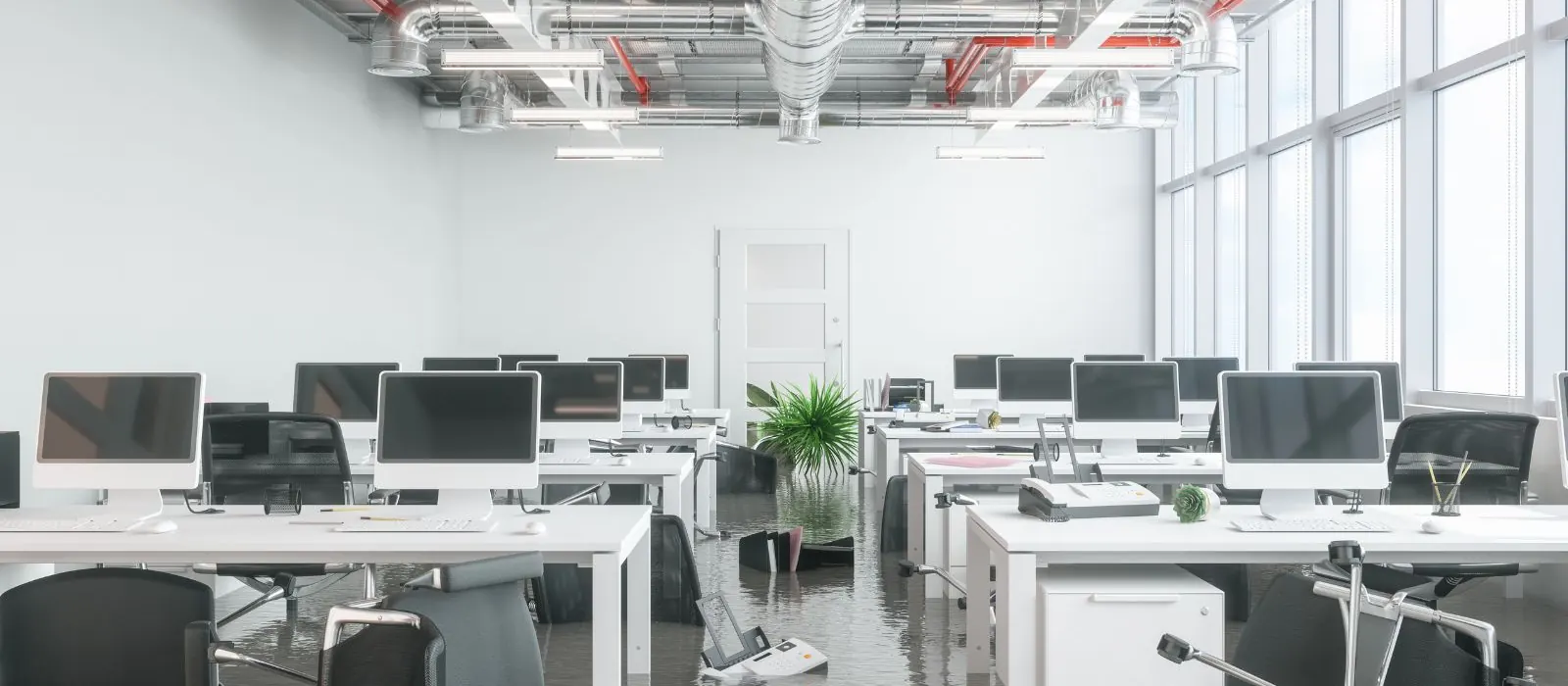
A water loss in a commercial space is a business problem as well as a building problem. Floors, ceilings and walls need to be dried, and the space may need to reopen as soon as it safely can. We can do the water work. Call (760) 769-1159 and describe the space, where the water came from and what is wet. We will explain what is needed and what it involves.
What we can do in a commercial space
This page covers only what we can actually do. We remove standing water, find moisture in floors, ceilings and walls, dry the structure, remove wet materials that cannot be dried and clean up. We do not manage tenant improvements, design buildouts, install fire suppression or repair roofs and mechanical systems.
Commercial structures differ from homes. Ceilings are often suspended grids, floors may be slab with finishes bonded to them, and walls can be metal stud with drywall. Some spaces share walls, ceilings or plumbing with neighboring units, so a leak in one place can cross into another. A walkthrough with moisture meters shows where water went.
Scope matters more in a commercial space because several parties may be involved. The owner, the tenant, the property manager and each insurer may need records. We keep moisture logs, photos and equipment lists by area so each party can see the part that applies to them. Who pays is a matter between you and the other parties, and we do not decide that.
The Census Bureau lists the population of Apple Valley at about 75,000 for 2025. The Town general plan flooding element describes winter storms, thunderstorms and summer tropical storms, and the Apple Valley Dry Lake collects runoff from most of town. Roof leaks and storm runoff are two of the more common sources, and cooling equipment that works through the summer heat described in the Town profile adds condensate leaks.
Signs of a water loss in a business space
| What you notice | What it usually means |
|---|---|
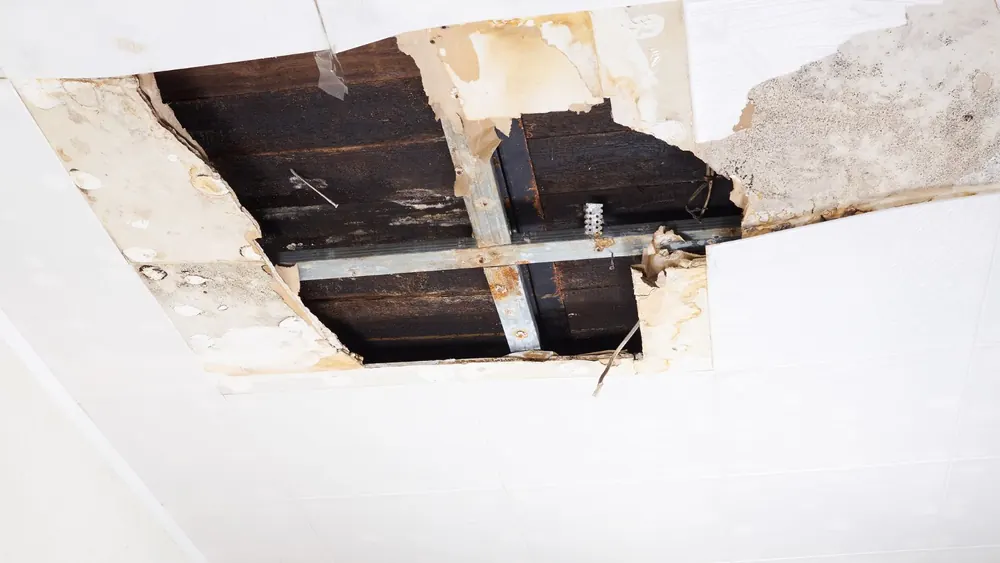
| Stained or sagging ceiling tiles | Water above the ceiling grid from a roof, pipe or cooling unit |
| Wet carpet or lifted floor covering | Water under the floor surface |
| Peeling paint or soft drywall at the base of a wall | Water in the wall cavity |
| A musty smell in a closed space | Hidden moisture and possible mold growth |
| Water in a shared wall or ceiling | A leak that may belong to a neighboring unit or the building |
First-hour safety steps for a commercial water loss
Safety comes before property
Keep people out of wet areas near electrical panels, outlets and equipment. Turn off breakers for wet circuits only from a dry panel. If water came from a drain or toilet, treat it as contaminated and keep the space closed.
- Stop the source. Close the nearest shutoff or the building main, or contact the building owner or property manager.
- Protect people. Close wet areas and keep staff and customers out of them.
- Protect equipment and records. Move computers, paper files and inventory off wet floors.
- Photograph and record. Note the time you found the water, the source and what was damaged.
- Call us and your insurer. The California Department of Insurance advises making temporary repairs and keeping a log of every call.
Water in your commercial space?
Describe the layout and call (760) 769-1159. The line is open 24/7.
How we work in a commercial space
Crews start with the safe removal of water, using submersible pumps and extractors. Moisture meters and a thermal camera map the spread across floors, ceilings and walls. Wet ceiling tile and insulation come out, and drywall is cut where it is saturated.
Air movers and LGR dehumidifiers dry the rest. In larger spaces the equipment count is higher and the layout of cords and air flow takes planning. ANSI/IICRC S500 is the published reference for professional water damage restoration, and we use it as our drying reference. Readings are logged at each visit.
We do not promise a response time. Dispatch sends a crew the same day when one is available. For the process in detail, see water mitigation. For storm or flood water entering from outside, see flood damage restoration.
What changes the cost of a commercial loss
- The floor area, ceiling height and number of connected spaces
- The source and water category
- The finishes involved, such as carpet tile, vinyl, ceiling grid or drywall
- Access, layout and the need to work around operations
- The amount of equipment and the days it needs to run
- Whether contents must be moved before drying
Insurance for commercial water losses
A commercial policy often treats sudden water damage differently from long-term leaks. Tenants and owners may each have a policy, and responsibility depends on the lease and the source. Business interruption coverage, where it exists, usually depends on documentation of the loss.
Your insurer decides coverage, and we do not approve claims. We provide photos, readings and a written scope you can share with the insurer, the owner or the property manager.
Commercial loss mistakes to avoid
- Waiting for the next business day to call
- Leaving wet ceiling tile or carpet tile in place
- Assuming a neighboring unit is not affected
- Throwing away damaged items before photographing them
- Reopening before the space has been checked for moisture
Commercial help across the High Desert
We serve 92307 and 92308 and the nearby cities of Victorville, Hesperia and Adelanto. For a water loss in a home, see emergency water removal.
Frequently asked questions
Is emergency commercial water damage service available in Apple Valley?
Yes. Dispatch is open 24 hours a day, every day. A crew is sent the same day when one is available, and the dispatcher helps you plan first steps. We do not promise an arrival time.
What do you actually do in a commercial space?
We remove water, map moisture, dry the structure, remove wet materials and clean up. We do not design buildouts or repair roofs and mechanical systems.
Do I need to call the property manager first?
If you are a tenant, notify the owner or manager as soon as you can, and call us in parallel if water is spreading.
Can you work around the business?
We can discuss the layout and the schedule on the call. What is possible depends on the source and the spread.
Will you work with my insurer?
We provide photos, readings and a written scope. Your insurer decides coverage.