
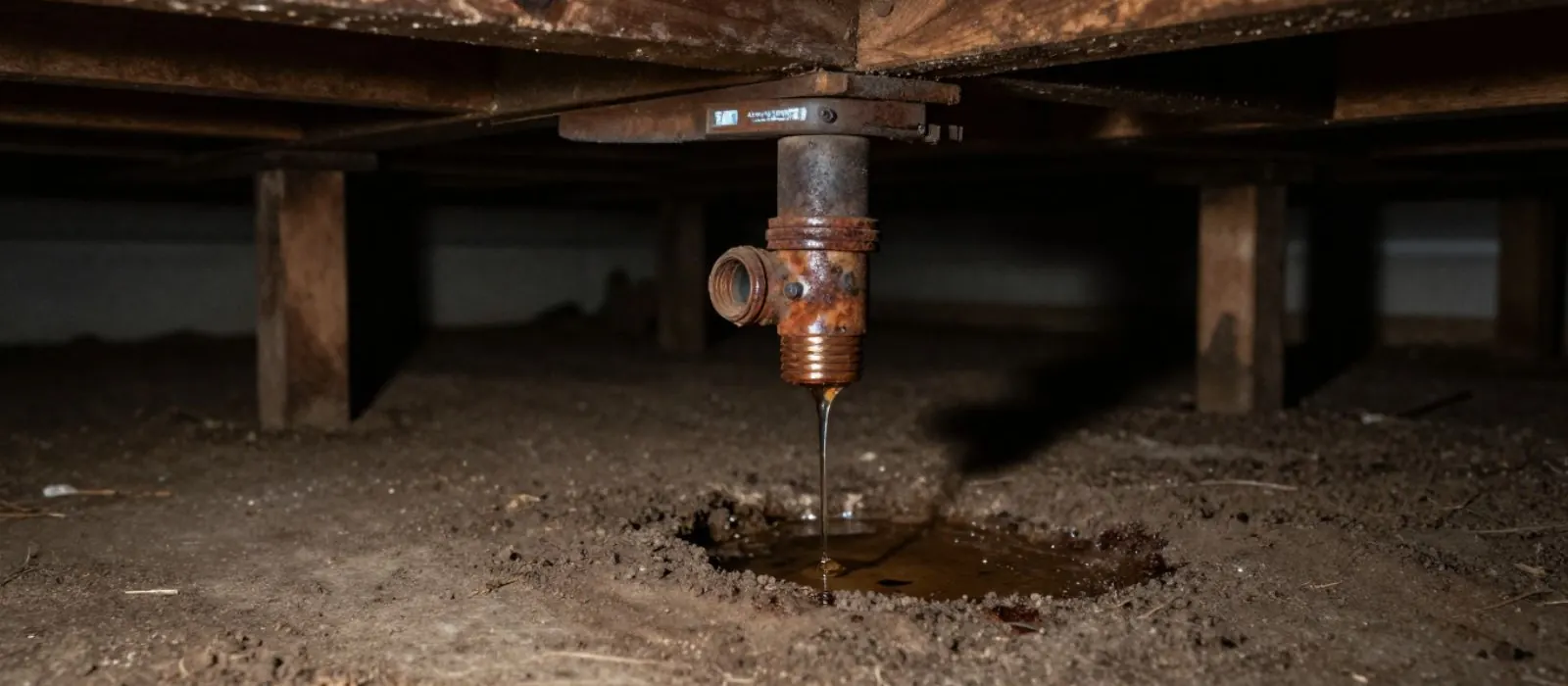
We want to be honest about local conditions. Most Apple Valley homes are built on concrete slabs, and basements are the exception. That means crawl spaces are the minority here. They do exist under raised-floor houses, older additions and some custom builds, and when one floods the water sits out of sight under the floor and drives moisture into the structure above. Call (760) 769-1159 if you have water under a raised home.
How crawl space water damage happens in Apple Valley
There are two main routes. The first is a plumbing failure. A supply line or drain under the floor leaks, and the water collects on the dirt below. The second is runoff. The Town of Apple Valley general plan flooding element says water on the valley floor often spreads in braided channels and sheet flow, and that the Apple Valley Dry Lake collects runoff from most of town.
When heavy rain arrives, water can move across flat lots and pool against a foundation. The Town element lists storm seasons as winter storms, local thunderstorms and summer or early fall tropical storms. A crawl space vent or an access hatch set below the lot grade lets water in. Poor grading near a foundation makes it worse.
A crawl space adds a safety layer that other jobs do not have. Clearance is tight, the air can be stale and sharp debris is common. Crews size equipment to fit through the hatch, and pumps often run from outside the space on long hoses. Sometimes the best way to dry the floor above is from the room side, with mats and air movers, while the space below is drained.
The dry climate keeps most crawl spaces dry most of the year. That is the trap. Owners stop checking, and a slow leak can run for months. The Census Bureau lists about 70 percent owner occupancy in Apple Valley, so the person who catches the problem is usually the homeowner. The EPA guide on mold and moisture says wet materials should be dried within 24 to 48 hours.
Signs of water under the floor
| What you notice | What it usually means |
|---|---|
| A musty smell from floor vents | Moisture or mold in the crawl space |
| Floors that feel soft, bouncy or cool | Wet subfloor or joists |
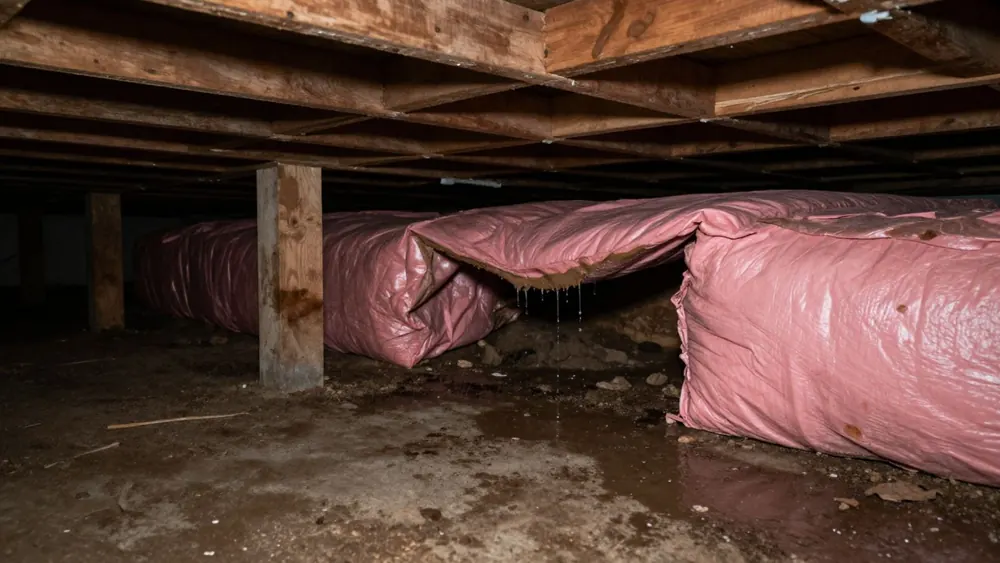
| Sagging insulation under the floor | Insulation has absorbed water and is pulling away |
| Standing water or a damp mud surface through the hatch | A plumbing leak or runoff has entered the space |
| Wood that is dark, soft or fuzzy | Long-term moisture and possible rot or mold |
Most Apple Valley homes will not have this problem, so if you have a slab, see slab leak water damage instead. If runoff reached your home from outside, flood damage restoration covers the broader case.
First-hour safety steps for a flooded crawl space
Do not crawl in alone
A flooded crawl space can hide live wiring, sharp debris and contaminated water. Do not enter if water is standing or if the water may have come from a sewer line. Turn off power to the crawl space circuit only if the panel is dry.
- Find and close the shutoff if a pipe is leaking, and close the main if you cannot tell.
- Turn off power to equipment or lights in the crawl space from a dry panel.
- Do not enter standing water. Look from the hatch with a flashlight.
- Move belongings from storage near the access hatch.
- Photograph from the hatch, then call. The California Department of Insurance advises keeping a log of every call.
Water under the house?
Stay out of the space and call (760) 769-1159. The line is open 24/7.
How we clean up crawl space water damage
Submersible pumps and small extractors remove standing water. Moisture meters and a thermal camera map the subfloor, joists and wall bottoms above the space. Wet insulation is removed and bagged, since insulation that has absorbed water does not dry in place. Contaminated water is handled with protective gear and contained.
Air movers and desiccant or LGR dehumidifiers dry the soil surface and the wood. HEPA air filtration helps when material is removed. ANSI/IICRC S500 is the published reference for the drying process, and readings are taken at every visit. We do not build vapor barriers or drainage systems, so those are done by a specialist contractor.
See water mitigation for how drying is staged, and mold remediation if wood is already stained or fuzzy.
What changes the cost of crawl space cleanup
- Access, since a tight hatch slows pumping and material removal
- Water depth and whether the source is clean or contaminated
- The size of the space and the amount of insulation removed
- Subfloor and joist moisture, which sets the drying time
- Whether mold or rot is present and needs a separate scope
- The days of equipment needed to dry soil and wood
Insurance and crawl space water
Plumbing failures under the floor are often covered for the water damage, while seepage from the ground and surface flooding usually fall under flood coverage, which is a separate policy with a waiting period. Gradual moisture and lack of maintenance are common exclusions.
Your insurer decides coverage. Photos from the hatch, readings and a written scope help the adjuster.
Crawl space prevention and mistakes to avoid
- Check the crawl space after storms and before winter
- Keep lot grading sloped away from the foundation
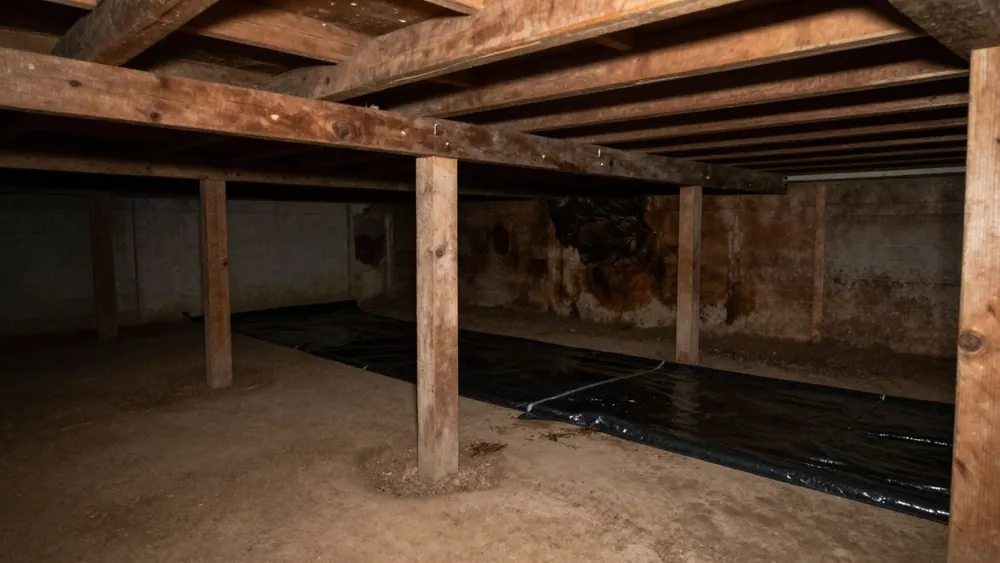
- Cover bare soil with a vapor barrier installed by a contractor
- Never leave wet insulation in place
- Do not seal a wet crawl space
- Do not store wood or cardboard against the foundation
Crawl space help across the High Desert
Crews work in 92307 and 92308 and in Victorville, Hesperia and Adelanto. We say so plainly when a call turns out to be a slab or an attic issue and point you to the right service.
Frequently asked questions
Is emergency crawl space water damage cleanup available in Apple Valley?
Yes. Dispatch is open 24 hours a day, every day. A crew is sent the same day when one is available. We do not promise an arrival time, and the dispatcher tells you what to shut off while you wait.
Are crawl spaces common in Apple Valley?
No. Most homes here are on slabs. Crawl spaces exist under some raised-floor houses and older additions, and those are the homes this page applies to.
Can you waterproof my crawl space?
No. We do not install drainage, waterproofing or vapor barriers. We pump out water, dry the space and clean up, and a specialist handles the barrier.
Is it safe to look inside?
Only from the hatch with a light. Standing water may be near live wiring or contaminated, so let a crew enter.
Can mold follow crawl space water?
Yes. The EPA says to dry water-damaged areas within 24 to 48 hours to prevent mold, and wood under a floor can hold water longer than that.