
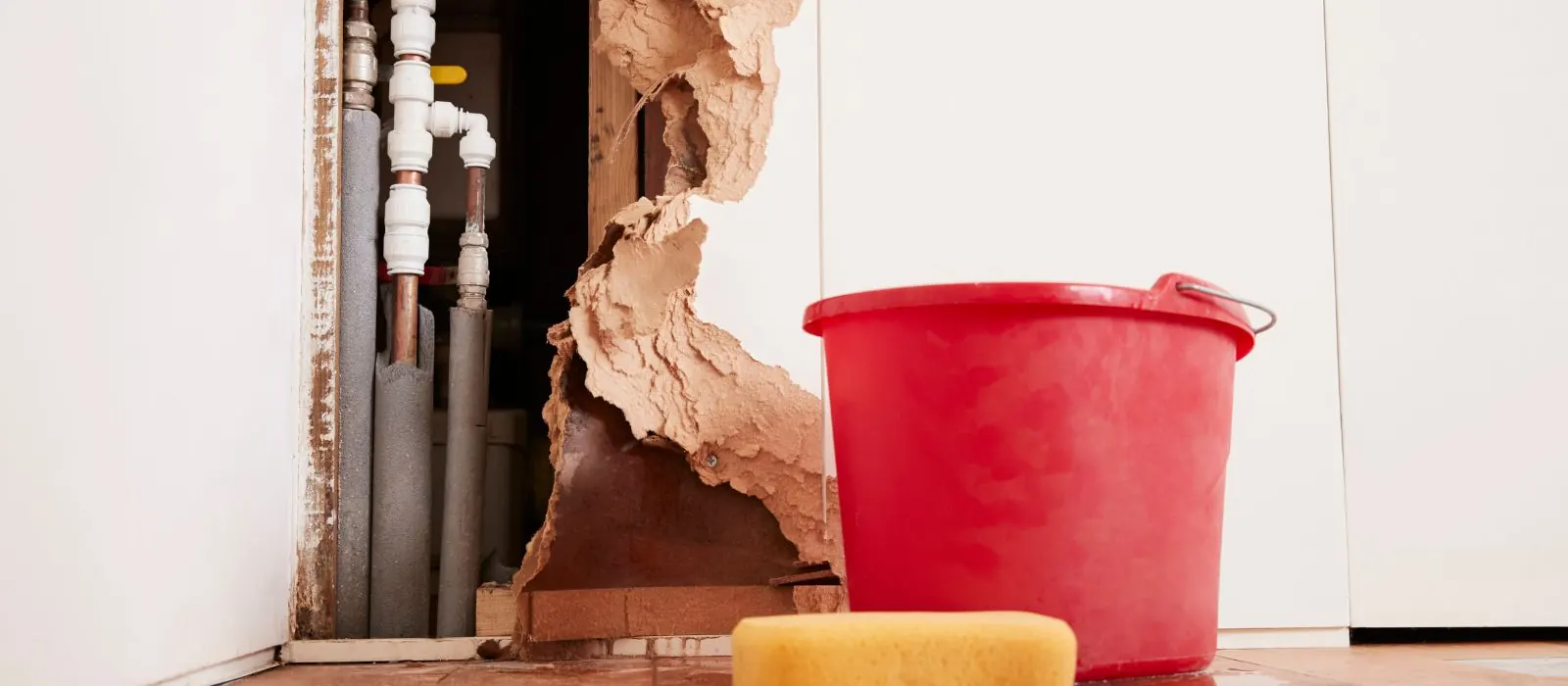
A burst pipe does not pause while you decide what to do. Water keeps arriving under line pressure until someone closes a valve, and every minute pushes it further into drywall, insulation and subfloor. If water is moving through your Apple Valley home right now, find the main shutoff, close it, and call (760) 769-1159. Dispatch is open 24 hours a day and will talk you through the rest.
How burst pipes happen in Apple Valley homes
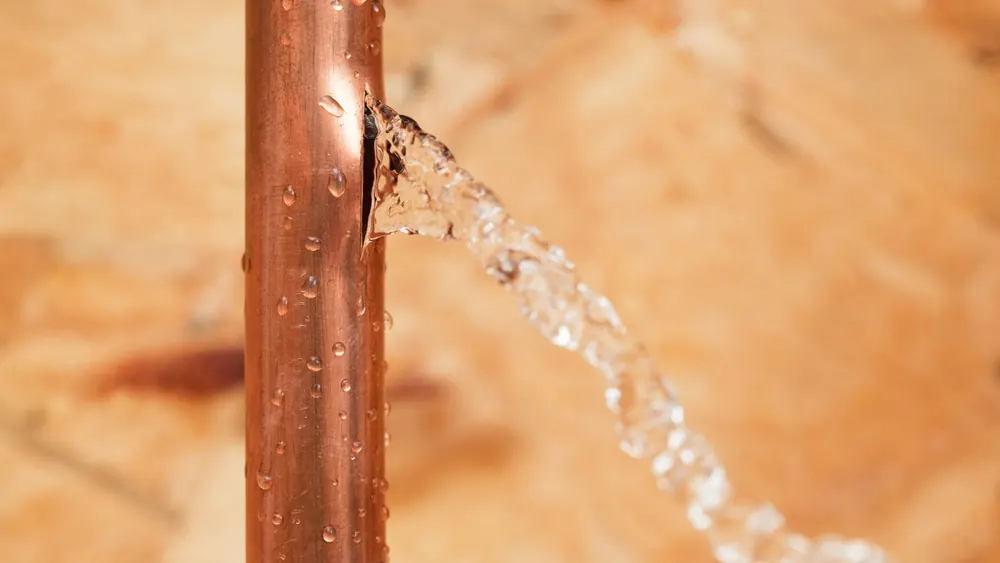
Apple Valley sits at an elevation of about 3,000 feet, and the Town of Apple Valley community profile describes winter temperatures that dip into the low 20s. That is cold enough to freeze exposed lines in garages, attics, hose bibs and the plumbing along north-facing walls. The ice rarely splits the pipe on its own. The split shows when the ice thaws and pressure comes back.
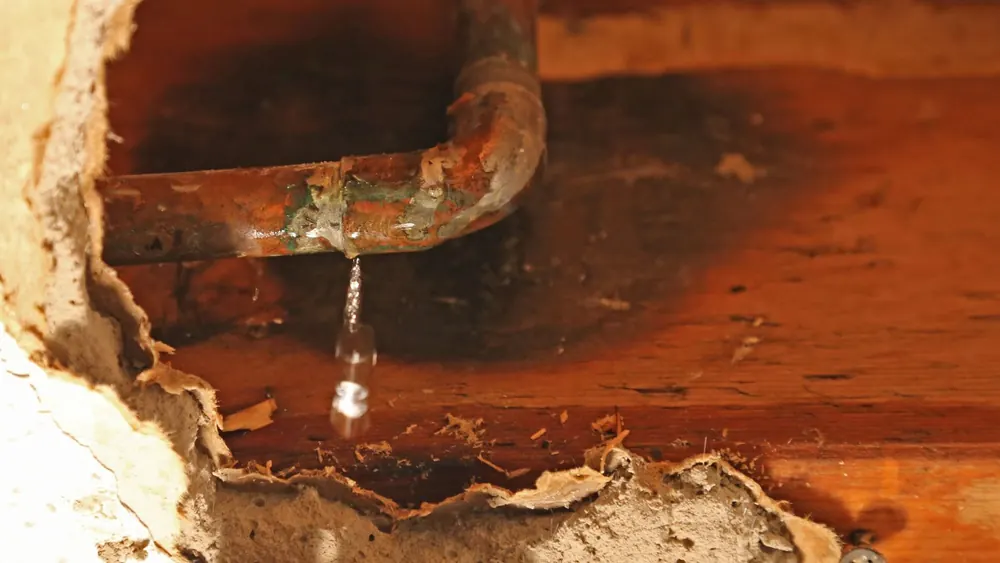
Cold is only one cause. Most burst pipes here come from age and wear. Galvanized steel corrodes from the inside, copper develops pinholes, and plastic fittings crack at their joints. A failing pressure regulator can push a weak section over the edge. Flexible supply lines to toilets and sinks split at their crimped ends and are among the most common culprits we are called to.
Many Apple Valley homes are single story and built on concrete slabs, and basements are the exception. That changes what a burst does. Water cannot drop to a lower level, so it spreads across the floor, wicks up the bottom of the walls and travels under flooring into the next room. A burst in an attic or ceiling space does the opposite and brings wet insulation down through the drywall.
Signs of a burst pipe and what they mean
| What you notice | What it usually means |
|---|---|
| Running water sound with every fixture off | An active leak in a supply line, often inside a wall |
| A ceiling stain that grows or a bulge in the drywall | Water sitting above the ceiling, from an attic or upper-floor line |
| Baseboards that swell or paint that bubbles | Water in the wall cavity moving down to the floor |
| A warm or damp patch on the floor | A hot water line leaking under the flooring or slab |
| A water meter that keeps moving with everything off | A leak somewhere between the meter and your fixtures |
A warm spot on a slab floor is a special case. If that matches what you feel underfoot, see our page on slab leak water damage for how those leaks are found and handled.
First-hour safety steps for a burst pipe
Electricity and standing water do not mix
Do not touch outlets, cords or appliances that are wet or standing in water. Turn breakers off only if the panel is dry and you can reach it from dry ground. If you are unsure, call the electric utility or 911 before you call us.
- Close the main valve. It is often at the side of the house, near the water heater, in the garage or at the meter box. Apple Valley Ranchos Water is the primary provider in town and Golden State Water serves part of it, according to the Town utilities element, so the street valve may belong to either utility.
- Turn off the water heater. An electric element can burn out if the tank empties while the power is on, and a gas unit should be set to pilot.
- Drain the lines. With the main closed, open the lowest faucet to relieve pressure and let the pipe empty.
- Protect what you can. Lift small furniture, pull rugs and slide electronics away from wet floors. Leave heavy items for the crew.
- Document, then call. Take photos of the pipe, the wet areas and anything damaged. The California Department of Insurance advises making temporary repairs to stop further damage and keeping a log of your calls.
Water still moving?
Close the valve if you can, then call (760) 769-1159. The line is open 24/7.
How we handle a burst pipe loss
The crew starts by confirming the water is stopped, then removes standing water with submersible pumps and portable or truck-mounted extractors. Moisture meters and a thermal camera map where water went, because a burst usually travels farther than it looks. Wet insulation, carpet pad and swollen baseboards come out. Drywall is opened only where readings call for it.
Air movers and LGR dehumidifiers then dry what stays. ANSI/IICRC S500 is the published standard for professional water damage restoration and is the reference our drying work follows. We read the moisture again at each visit and keep the numbers, so the end of drying is proven rather than guessed. A plumber replaces the failed pipe, and we time the drying equipment around that repair.
Cleanup and rebuilding follow once the structure reads dry. See water mitigation for how structural drying is run, and emergency water removal when standing water is the main problem.
What changes the cost of burst pipe cleanup
- How long water ran before the valve was closed
- Whether the water was clean supply water or picked up contamination along the way
- The floor area and wall height that got wet
- The materials involved, since carpet, hardwood and insulation are handled differently
- Access to wall cavities, attic spaces and the area under cabinets
- The number of drying days and the amount of equipment needed
Repairs to finished surfaces are priced separately from the drying work. We explain the scope and the price before work starts, and there are no dollar amounts on this page because every loss reads differently.
Insurance and burst pipes
A burst pipe is a sudden plumbing event, so it normally runs through your homeowners or renters policy rather than flood coverage. Flood insurance is a separate policy and comes with a waiting period, which means it will not help with a loss that has already happened. Insurers draw a line between sudden failures and slow leaks that went unnoticed for months, and the slow kind is far more likely to be denied.
Your insurer decides coverage, not us. What we provide is the paperwork that supports a claim, which means photos, moisture readings and a written scope. Call your insurer early and ask what documentation they want before demolition starts.
Mistakes to avoid after a pipe bursts
- Waiting to see whether the water stops by itself
- Turning the main back on to test the repair before the plumber is finished
- Pointing a household fan at the wall and calling it dry
- Leaving soaked insulation in place because the surface looks fine
- Painting over a stain before the wall has been measured
- Using a household vacuum on standing water
The EPA mold guidance says water-damaged areas should be dried within 24 to 48 hours to prevent mold growth. That window is the reason a quick call matters even when the water seems under control.
Burst pipe help across the High Desert
The same crews work in 92307 and 92308 and across the nearby towns of Victorville, Hesperia and Adelanto. If your loss started in a frozen line, our page on frozen pipe water damage covers the cold-weather side.
Frequently asked questions
Is emergency burst pipe cleanup available in Apple Valley?
Yes. Dispatch is open 24 hours a day, every day of the year. A crew is sent the same day when one is available, and the dispatcher tells you what to shut off while you wait. We do not promise an arrival time because it depends on crew availability and your location.
Do you repair the pipe itself?
No. A plumber replaces the failed section. We remove the water, dry the structure and clean up, and we schedule drying equipment around the plumber so neither job slows the other.
How soon does damage start after a pipe bursts?
Wet drywall, pad and insulation start absorbing water immediately. The EPA says to dry water-damaged areas within 24 to 48 hours to prevent mold, so a same-day call is the safer choice.
Will insurance pay for burst pipe damage?
Sudden pipe failure is often covered by a homeowners or renters policy, while gradual leaks often are not. Your insurer decides, and we supply photos, readings and a written scope to support the claim.
Do walls need to be opened if the paint looks dry?
Sometimes. Paint can look fine while the cavity behind it is wet. We measure first and open only where readings show trapped moisture.