
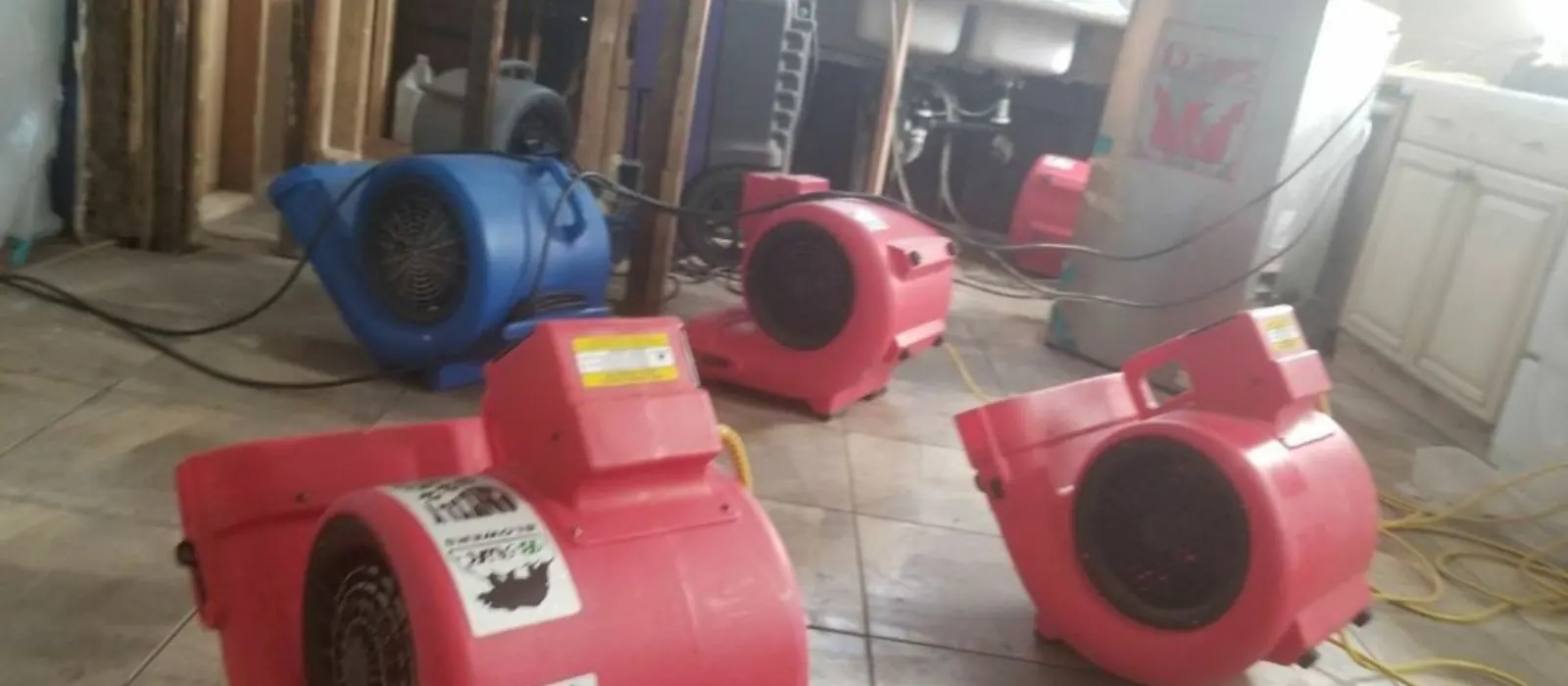
Drywall holds up well until it gets wet. Gypsum soaks up water, loses strength and starts to crumble, and the paper face becomes food for mold. The paint can look fine while the cavity behind it holds water. If a wall in your home is soft, stained or bubbling, call (760) 769-1159 before anything is painted over.
How walls get wet in Apple Valley homes
Walls get wet from inside and out. Supply lines and drains run through them. Dishwashers, washers and showers sit against them. Roof leaks send water down the framing, and storm runoff pushes water in at the base. Water in a cavity travels down the studs, soaks the bottom plate and wicks upward through the drywall.
The Town of Apple Valley community profile lists the elevation at 3,000 feet and winter lows in the low 20s. Pipes in exterior walls that freeze can split and then flood the cavity when they thaw. The Town general plan flooding element describes winter storms from November to April and summer tropical storms, both of which can push water against exterior walls.
The EPA guide to mold says that if wet materials are dried within 24 to 48 hours, mold generally will not grow. It also says homeowners can often handle a moldy area smaller than about 10 square feet, but larger areas or substantial water damage call for a professional. Drywall that has been wet for days usually falls in the second group.
Drywall comes in standard, moisture-resistant and cement-board types. Standard board in a bathroom or laundry wall is the type most likely to fail. Moisture-resistant board slows the damage but does not stop it once a leak runs for days. When we cut a wall, we note the type of board we find, because it changes the rebuild and sometimes the claim.
Signs a wall is holding water
| What you notice | What it usually means |
|---|---|
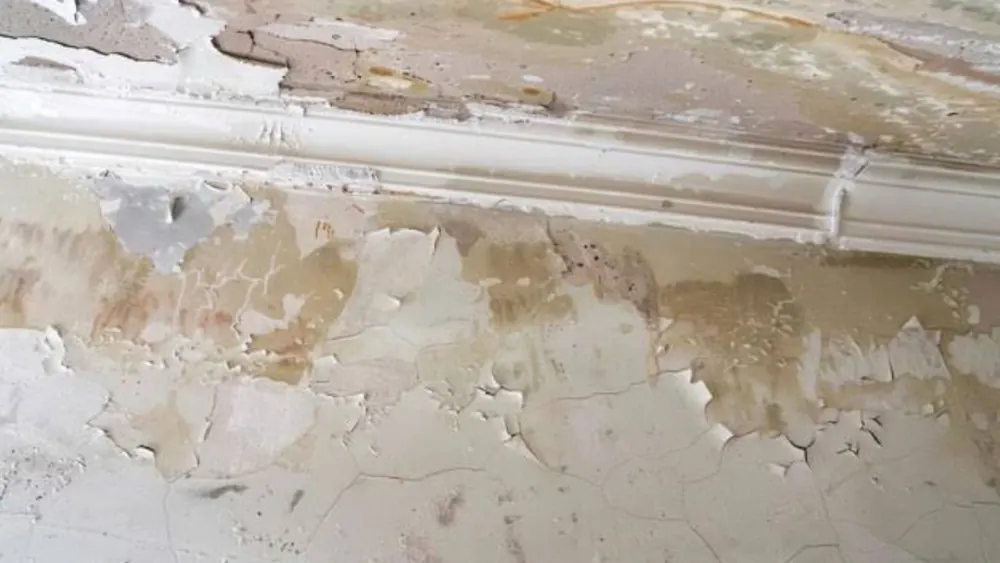
| Paint bubbling or peeling on a wall | Moisture is moving through the drywall |
| A soft, crumbly spot when pressed | The gypsum has lost strength |
| A brown stain with a hard edge | Water has dried at the edge of a wet area, possibly more than once |
| Baseboards that swell or separate | Water at the bottom of the wall |
| A musty smell or dark spots | Hidden moisture and mold growth |
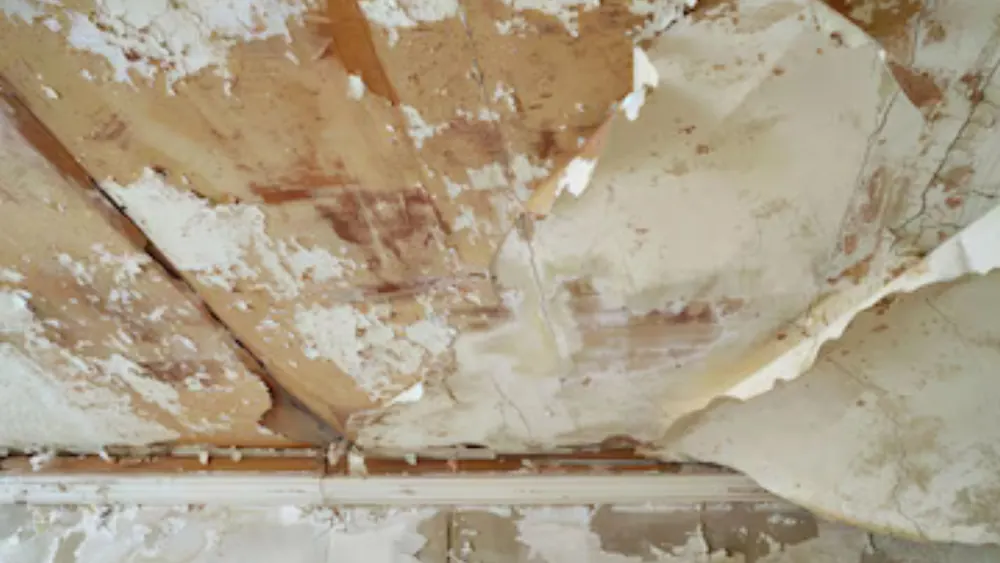
If the stain is mostly on the ceiling, the closest guide is our general water damage repair page, which covers ceilings and finishes together. For mold on drywall, see mold remediation.
First-hour safety steps for wet drywall
Do not cut into a live wall
Wet walls can hide wiring and plumbing. Do not poke or cut wet drywall near outlets and switches. Turn off breakers for the wall from a dry panel, and do not use a household vacuum on standing water.
- Stop the source. Close the valve or stop the roof or appliance leak.
- Remove furniture and hangings from the wet wall.
- Keep the room closed and run the air conditioner to lower humidity.
- Do not paint or caulk over a stain.
- Photograph the wall and the source, then call. The California Department of Insurance advises keeping a log of every call.
Wall wet or soft?
Call (760) 769-1159. Dispatch answers all hours.
How we handle water-damaged drywall
We use moisture meters and a thermal camera to measure how high the water rose and how far it spread along the wall. Drywall that is soft, sagging or contaminated is cut out, and in most cases a flood cut is made a couple of feet up the wall. Wet insulation behind it is removed.
Studs and the bottom plate are dried with air movers and LGR dehumidifiers until readings reach the dry standard. ANSI/IICRC S500 is the published reference for that work. Cavities are left open until they are dry, and we record readings at each visit. When the structure is dry, drywall can be hung, taped, textured and painted.
We prepare the wall and the new drywall is installed by us or a contractor of your choice. For the wider picture, see water mitigation and structural drying. Permit questions on larger rebuilds go to the Town of Apple Valley Building and Safety division.
What changes the cost of wall repair
- The height and length of wall that must be removed
- Whether insulation and baseboard are wet
- Ceiling or wall texture that has to be matched
- Whether the water was clean or contaminated
- Access to the wall, including cabinets and fixtures
- The number of drying days before the wall can close
Texture matching and paint are separate steps. We explain scope and price before work starts.
Insurance and drywall damage
Sudden water damage to drywall is often covered, and long-term seepage often is not. Insurers want to see how far the damage went, so photos and readings from before the wall is opened are useful. A written scope that lists the wall sections removed helps the adjuster see what happened.
Your insurer decides coverage. We provide readings, photos and a written scope.
Wall repair mistakes to avoid
- Painting over a stain without finding the source
- Closing a wall before it is dry
- Cutting only the stained area and leaving wet drywall behind it
- Leaving wet insulation in the cavity
- Taping and mudding wet drywall
- Ignoring a musty smell
Drywall repair help across the High Desert
We serve 92307 and 92308 and the nearby cities of Victorville, Hesperia and Adelanto.
Frequently asked questions
Is emergency wet drywall repair available in Apple Valley?
Yes. Dispatch is open 24 hours a day, every day. A crew is sent the same day when one is available. We do not promise an arrival time.
Can wet drywall be dried and kept?
Sometimes. Drywall that is only damp and has not crumbled can be dried in place. Soft or contaminated drywall is removed.
How much wall do you cut?
It depends on readings. A flood cut about two feet up is common after floor-level water.
Do you paint and texture?
We can prepare the wall. Painting and texture matching are done once drying is finished.
Why not just paint over the stain?
Paint seals moisture in and hides the problem. The stain returns and mold can grow behind it.