
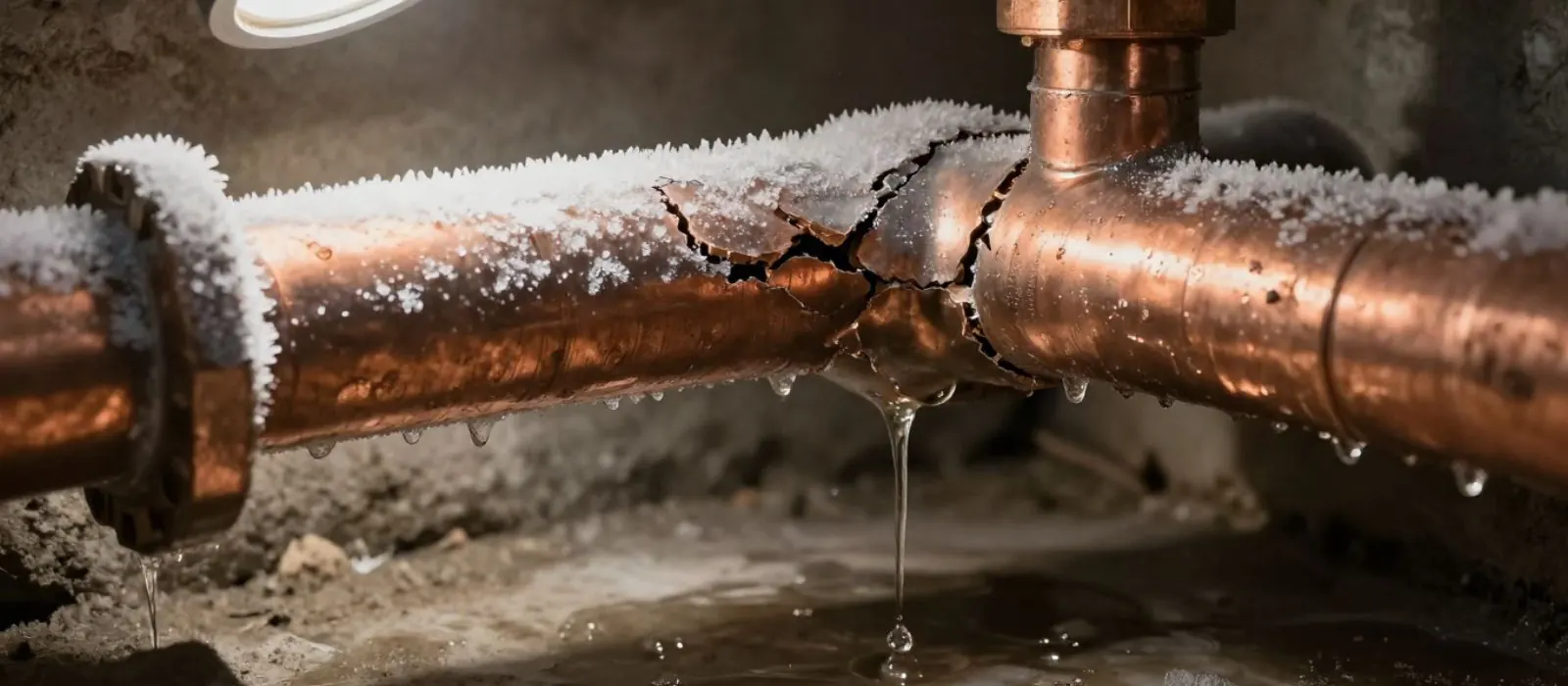
Freezing weather is not constant in Apple Valley, but it is real, and it catches people off guard because many homes here were never built for hard freezes. A pipe that froze overnight can look fine at breakfast and start flooding the garage by noon. If a thawing line is already leaking, close the main valve and call (760) 769-1159 for dispatch.
How common are frozen pipes in Apple Valley?
We want to be plain about this. The Town of Apple Valley community profile puts the town at an elevation of about 3,000 feet and describes winter temperatures dipping into the low 20s. Freezing nights happen every winter, but they are short and most days warm up. That makes frozen pipes less common than in snow country, and more likely to hit a home whose owner never thought about it.
The Town general plan flooding element says winter storms bring most of the area rainfall and usually occur between November and April. A cold storm that arrives with wind is the pattern that tends to freeze lines. Pipes in garages, attics, exterior walls, irrigation risers, pool equipment and vacant houses are the usual victims.
Houses with the water heater in an unheated garage, a hose bib on the north wall or a vacant rental with the heat off are the ones we see. Homes with plumbing running through an attic are at risk too, because attic insulation keeps heat in the living space and leaves the pipes colder than the room below.
Vacant and seasonal homes deserve a special mention. A rental between tenants, a second home or a property whose owner is out of town can sit through a freeze with nobody to notice a leak. By the time anyone returns, the water has run for days. If you manage such a property, a quick check after the first freezing forecast is cheap insurance.
Signs of a frozen or split pipe
| Sign | What it means |
|---|---|
| A faucet that gives a trickle or nothing on a cold morning | Ice is blocking a line, and it may already be cracked |
| Frost or a bulge on an exposed pipe | Ice has formed inside, and the pipe is under stress |
| Water stains on a garage wall or ceiling after a thaw | A split opened as the ice melted and pressure returned |
| A sudden hiss or drip from a hose bib or an attic pipe | A crack has opened and water is flowing |
A crack can sit hidden behind a wall for hours. A dripping fixture and a damp baseboard together are enough reason to shut the main and call a crew. If the failed pipe was an ordinary supply line, our burst pipe water damage page covers the same cleanup in more detail.
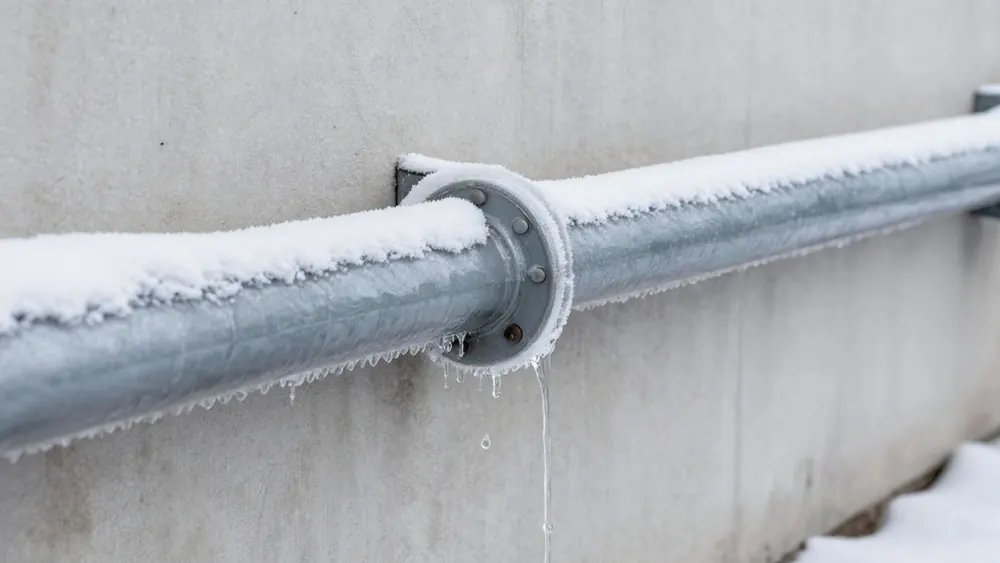
First-hour safety steps for a thawing pipe
Do not use open flame
Never thaw a pipe with a torch or a propane heater, and never put a space heater near wet floors. Use warm air from a hair dryer only on a pipe that has not cracked, and only while standing on a dry surface.
- Shut the main valve before you try to thaw anything. A pipe that thaws with the valve open will leak as soon as it clears.
- Open the faucet nearest the frozen section so melting water has somewhere to go.
- Check the ceiling and garage walls for new stains, bulges or dripping that show a crack has already opened.
- Cut power to wet areas only if you can reach the panel from dry ground, and call the utility if you are unsure.
- Photograph the pipe and the damage, then call your plumber and our line. The California Department of Insurance advises making temporary repairs and keeping a call log.
Frozen line, wet floor?
Close the valve and call (760) 769-1159. Dispatch is open 24/7.
Our response to a frozen pipe loss
The first job is removing water. Submersible pumps and extractors take out standing water, then moisture meters and a thermal camera show what the split soaked. Insulation, carpet pad and ruined baseboards are removed, and drywall is cut only where readings call for it. Garage slabs and exterior walls often hold water longer than they look.
Drying is run with air movers and LGR dehumidifiers, and ANSI/IICRC S500 is the reference standard for that work. We read the moisture at each visit and keep the numbers. A plumber replaces the cracked section, and we plan the drying equipment around that repair.
If the loss spread into several rooms, water mitigation explains how structural drying is staged. For clean-out after the drying, see water damage cleanup.
What changes the cost of frozen pipe cleanup
- How many rooms the water reached and how long it ran before the valve was closed
- Whether the split was in an attic, a wall or a garage
- Insulation, flooring and cabinet materials that got wet
- Equipment days, which depend on how wet the structure is
- Drywall replacement, which is priced separately from drying
We explain the scope and the price before work starts. There are no dollar figures here because a one-room garage leak and a ceiling collapse are different jobs.
Insurance and frozen pipes
Freezing and thawing damage is generally treated as a sudden plumbing event, so it normally falls under a homeowners or renters policy. Insurers separate sudden failures from neglect, and some policies add conditions for vacant homes or homes where the heat was left off. Read yours before the claim call.
Flood coverage is a separate policy with its own waiting period and does not respond to plumbing failures. Your insurer decides coverage. We provide readings, photos and a written scope.
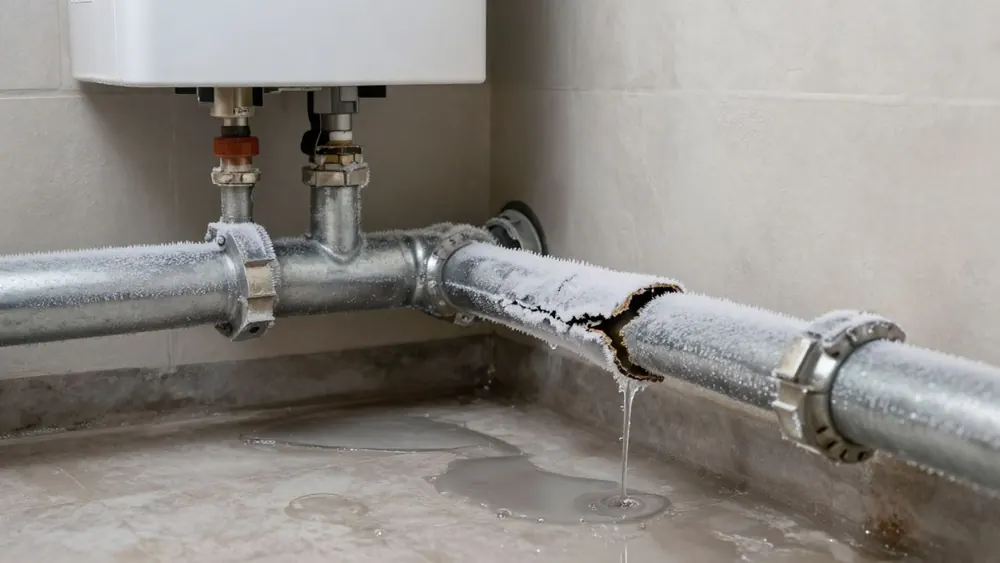
Prevention and mistakes to avoid in a freeze
- Disconnect and drain garden hoses and cover exposed hose bibs before a cold night
- Insulate pipes in garages, attics and exterior walls
- Open cabinet doors on exterior walls during a hard freeze
- Let a faucet drip on the coldest nights if a line has frozen before
- Do not shut off heat in a vacant house without draining the lines
- Never thaw a pipe with an open flame
Frozen pipe help across the High Desert
We work in 92307 and 92308 and in Victorville, Hesperia and Adelanto. Cold, windy nights hit the whole Victor Valley at once, so expect calls to cluster after a freeze.
Frequently asked questions
Is emergency frozen pipe water damage restoration available in Apple Valley?
Yes. Dispatch is open 24 hours a day, every day. A crew is sent the same day when one is available, and the dispatcher explains what to shut off while you wait. We do not promise an arrival time.
Do pipes really freeze at 3,000 feet in the Mojave?
They can. The Town community profile describes winter lows in the low 20s, and short freezes are enough to crack unprotected garage, attic and exterior-wall lines.
Should I thaw the pipe myself?
Only if the pipe has not cracked, with the main valve closed and warm air from a hair dryer. Never use a torch or space heater, and call a plumber if you see a crack or a bulge.
When does the flooding start?
Often when the ice melts. A cracked pipe can hold until pressure returns, so a thaw can bring a sudden flood hours after the freeze.
Does insurance cover frozen pipe damage?
Sudden freeze damage is often covered by homeowners and renters policies, with conditions for vacant homes. Your insurer decides, and we provide the readings and photos for the claim.