
Water is not gone when the standing water is gone. It stays in drywall, carpet pad, framing and the slab, and it keeps working. Structural drying is the process of pulling that water out on a schedule and proving with numbers that it has gone. If materials in your Apple Valley home are still damp, call (760) 769-1159.
Why drying is different in the High Desert
The Town of Apple Valley community profile reports about 350 sunny days a year and summer highs up to 110 degrees. Outdoor air is dry, and people assume a wet house will dry on its own. It often does not. Air conditioned homes are closed up, and moisture trapped behind baseboards, under flooring and inside wall cavities has no path out.
The EPA guide on mold and moisture says to dry water-damaged areas within 24 to 48 hours. Drying in a closed house needs equipment that moves air and removes moisture from it. Open windows at midday can help a little, but they can also bring in dust and let humidity swing.
Storms add another path. The Town general plan flooding element describes winter storms between November and April and summer tropical storms that bring heavy rain to the desert. After a storm, wet slabs and wall bottoms can stay damp for days unless the structure is dried deliberately.
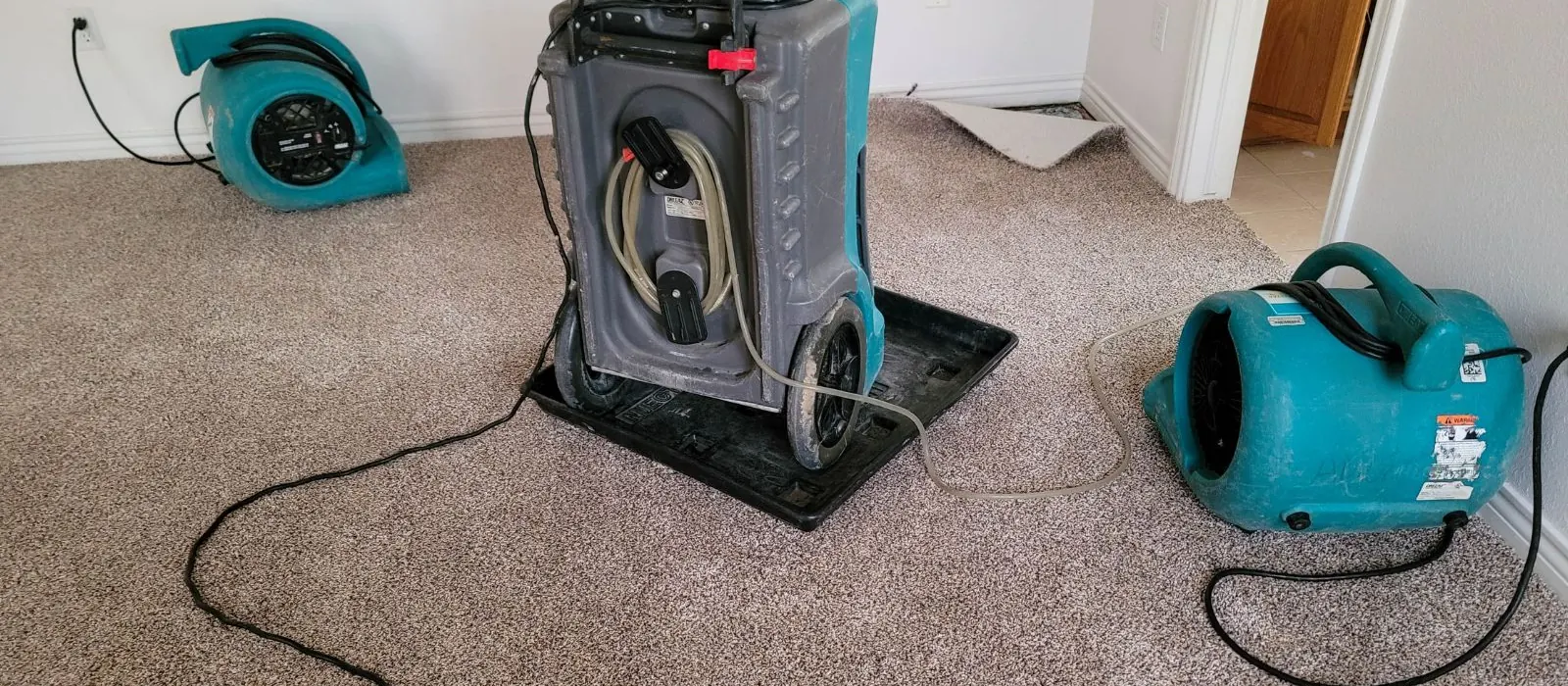
Setup is a matter of math and judgment. Air movers are spaced along walls and across floors, and dehumidifier capacity is matched to the volume of the room and how wet it is. Too little capacity stretches the job out. Too much air without dehumidification just moves moisture around. Equipment is adjusted as readings drop, so what is running on day three is usually not what was set on day one.
Signs a structure is still wet
| What you notice | What it usually means |
|---|---|
| Baseboards that stay swollen after the floor looks dry | Water is still in the wall bottom plate or the drywall |
| Carpet that feels cool or damp after extraction | Pad and subfloor are still wet |
| A musty smell a few days after a leak | Hidden moisture and early mold growth |
| Paint that bubbles or peels on a wall | Moisture is moving through the drywall |
| Wood floors that cup or gap | The subfloor and boards are drying unevenly |
First-hour safety steps before drying begins
Stop the source and keep power off
Drying cannot start until the water is stopped. Do not run extension cords through wet areas, and do not use space heaters or box fans on wet walls. Turn off breakers for wet rooms only if the panel is dry and reachable.
- Stop the source. Close the valve or turn off the appliance that is feeding the water.
- Remove standing water. Use towels and a wet vacuum, or call for extraction.
- Keep the room closed. Closing doors helps a dehumidifier work.
- Lift soft items off wet floors, including rugs, boxes and furniture legs.
- Photograph the damage and note the start time, then call. The California Department of Insurance advises keeping a log of every call.
Still damp after the water stopped?
Call (760) 769-1159 and we will explain how drying works. We answer all hours.
How structural drying is done
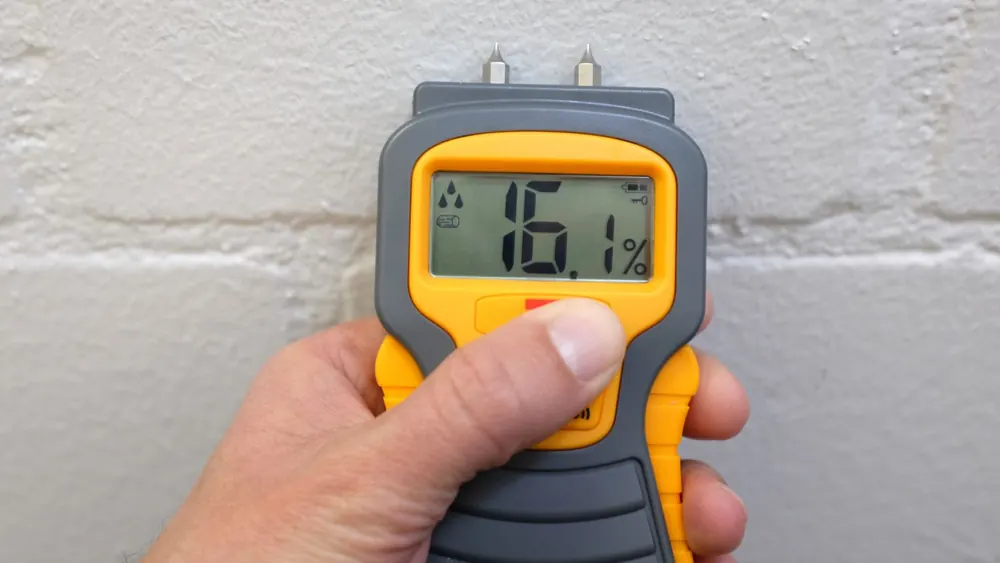
The crew begins with moisture mapping. Moisture meters read drywall, wood and concrete, and a thermal camera shows cooler, wetter zones behind walls. Those readings are written down and give the drying a target, which is the dry standard set by readings on unaffected material in the same home.
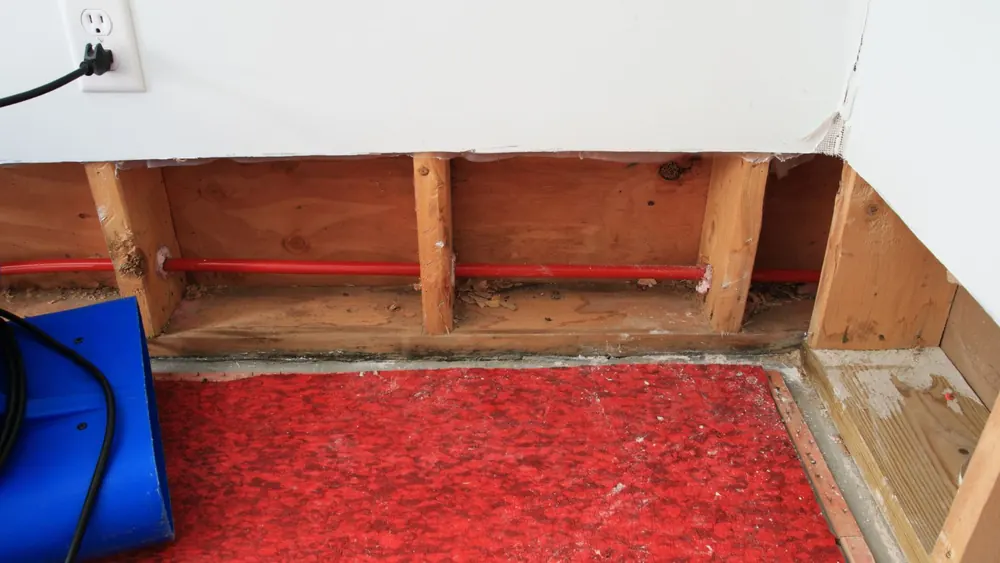
Air movers are placed to push air across wet surfaces, and LGR dehumidifiers pull moisture out of the room air. Desiccant dehumidifiers are used in cooler or low-humidity conditions. Floor drying mats can pull water from under hardwood. Wall cavities are vented by drilling small holes or removing baseboard. Equipment stays for days, not hours.
Readings are taken again at each visit and equipment is adjusted. Drying ends when the numbers reach the dry standard. ANSI/IICRC S500 is the published standard for water damage restoration, and it is the reference we follow. See water mitigation for the first-hours response, and water damage repair for rebuilding.
What changes the cost of structural drying
- The number of rooms, the wall height and the area of wet flooring
- The materials involved, such as drywall, hardwood, tile on slab or insulation
- Water category and whether materials must be removed before drying
- The number of air movers and dehumidifiers needed
- The number of drying days, which depends on how wet the structure is
- Access to cavities behind cabinets and in tight spaces
Equipment is not priced as a single flat number because every structure dries at its own pace. We explain scope and price before work starts.
Insurance and drying documentation
Adjusters often ask for moisture readings, the equipment list and the drying log. Those records show how wet the structure was and when it reached dry. A sudden water event is often covered, and long-term seepage often is not. Documentation matters most when the timeline is in question.
Your insurer decides coverage. We provide readings, photos and a written scope.
Drying mistakes to avoid
- Using box fans and no dehumidifier, which moves wet air around
- Running a heater at a wet wall, which can damage materials
- Taking equipment out before readings reach the dry standard
- Painting or installing flooring on a damp surface
- Relying on touch alone to decide a wall is dry
Structural drying help across the High Desert
We dry structures in 92307 and 92308 and in Victorville, Hesperia and Adelanto.
Frequently asked questions
Is emergency structural drying available in Apple Valley?
Yes. Dispatch is open 24 hours a day, every day. A crew is sent the same day when one is available, and the dispatcher tells you what to do while you wait. We do not promise an arrival time.
How long does drying take?
It depends on how wet the materials are and what they are made of. Drying usually takes days, and we keep equipment in place until readings reach the dry standard.
Why do you need to run dehumidifiers and fans together?
Fans move moisture off surfaces and dehumidifiers remove it from the air. Without a dehumidifier, the moisture just moves from the walls to the room air and goes back in.
Can I dry it myself with fans?
Fans alone leave moisture in cavities and slabs. A moisture meter tells you what is left, which is the part most homeowners cannot measure.
Will the equipment run my power bill up?
It adds to your electric use for the days it runs. We explain the equipment and the expected duration before starting.